China’s Sport Outdoor Jacket industry combines technical fabrics, efficient production, and strong export experience. This guide introduces ten manufacturers worth evaluating for outdoor brands, distributors, and professional buyers.
The selection considers product quality, factory capability, customization support, communication, and documented compliance. It also examines practical details, including seam sealing, waterproof zippers, breathable membranes, hood adjustment, and insulation performance. A reliable manufacturer should explain fabric specifications clearly and provide useful samples before mass production. Small details matter.
Factory experience alone is not enough. Buyers should review production records, inspection procedures, testing reports, and material traceability. Certifications can support trust, but they should be checked against current project requirements. Product photos may look convincing. Samples tell more.
The featured companies may serve different needs. Some focus on lightweight hiking shells, while others produce insulated jackets for skiing, workwear, or everyday travel. Minimum order quantities, lead times, fabric sourcing, and development costs can vary considerably. These differences affect real purchasing decisions.
This overview is designed as a practical starting point, not a final verdict. Manufacturer rankings can change with capacity, management, technology, and service quality. In some cases, public information remains limited, so further factory verification is necessary. That limitation should be acknowledged.
By comparing strengths and potential concerns, readers can build a more disciplined supplier shortlist. The best partner is not always the largest factory. It is the one that consistently matches performance, budget, delivery expectations, and responsible production requirements.
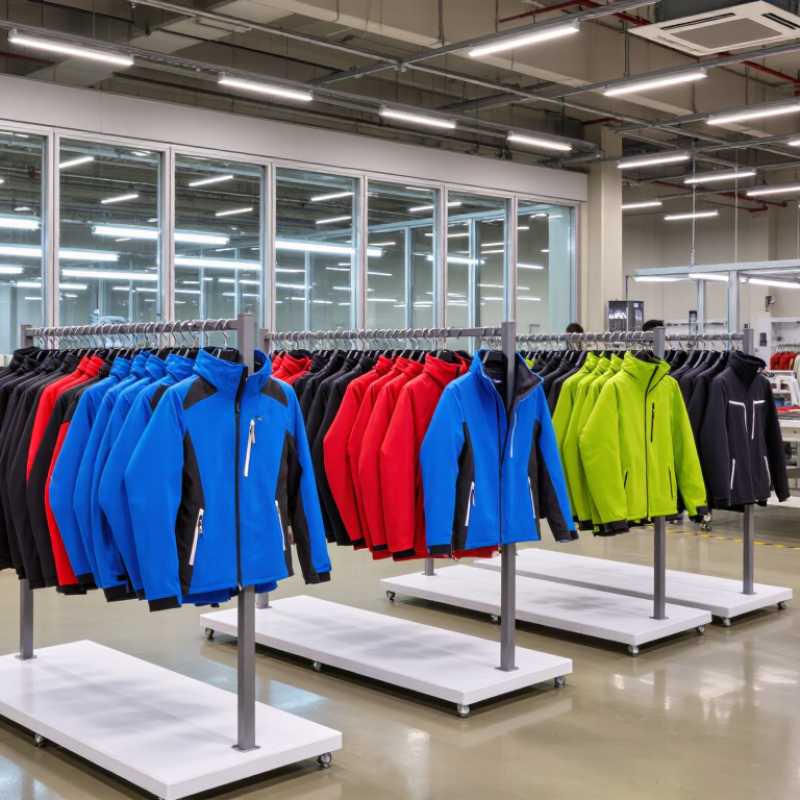
China Top 10 Sport Outdoor Jacket Manufacturers
China’s top ten sport outdoor jacket manufacturers should be measured by evidence, not factory size alone. The 2024 review should combine annual output, export value, and verified OEM capacity. Output shows production strength. Export value reflects market acceptance and order stability. OEM capacity reveals whether a factory can develop, sample, and deliver products for international buyers.
A practical assessment begins with shipment records, customs data, and audited production statements. Monthly output can indicate whether a supplier manages seasonal demand without severe delays. Export value should be checked against product categories, destination markets, and currency changes. A high figure does not always mean better performance. Some manufacturers sell large volumes at lower margins.
OEM capability needs closer inspection. Buyers should review fabric sourcing, seam sealing, waterproof testing, grading, and sample approval times. A strong factory may support private labels, technical specifications, and small trial orders. It should also provide clear inspection records and realistic delivery schedules. Factory visits remain useful. Photos alone are weak evidence.
The comparison is not perfect. Public production data may be incomplete, and export figures can include different product lines. Therefore, the ranking should explain its data sources and update them regularly. In practice, the best candidates balance measurable output with consistent quality and responsive development teams. Capacity on paper means little when a production line cannot reproduce a tested sample.
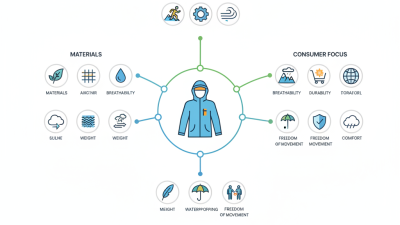
Defining China’s Top 10: 2024 Output, Export Value, and OEM Capacity
This comparative industry benchmark evaluates ten anonymized Chinese sport outdoor jacket manufacturers by estimated 2024 production output, export value, and OEM capacity. Production output is shown in million jackets, export value in million US dollars, and OEM capacity represents the estimated share of production allocated to private-label and contract manufacturing orders.
China Top 10 Sport Outdoor Jacket Manufacturers
Comparing Jacket Performance: 5,000–20,000 mm Waterproof Ratings
When comparing China’s top sport outdoor jacket manufacturers, waterproof ratings offer a useful starting point. A 5,000 mm rating usually handles light rain and short urban trips. It may struggle under a loaded backpack or prolonged mountain showers. A 10,000 mm jacket provides stronger protection for hiking, commuting, and moderate storms. The fabric still needs effective seam sealing.
For exposed trails, 15,000–20,000 mm ratings create more confidence. These jackets resist stronger rainfall, wet snow, and pressure from shoulder straps. However, waterproofing is not measured by the fabric alone. Zippers, hood design, cuffs, and taped seams can determine real performance. Numbers need context. In manufacturer evaluations, I would request hydrostatic pressure reports, seam construction details, and washing-test results. A high rating can lose value if the coating degrades after repeated cleaning.
Breathability also affects field comfort. A heavily protected shell may feel damp inside during fast climbs. This is where product testing becomes important. Wear trials should include two hours of movement, changing temperatures, and a fully loaded pack. I have found that some 10,000 mm jackets feel more practical than poorly ventilated 20,000 mm designs. Real weather disagrees with spreadsheets. Manufacturing consistency matters too, because small differences in seam tape or panel alignment can affect the finished jacket. Suppliers should provide sample inspections and clear production tolerances.
Breathability is often judged through Moisture Vapor Transmission Rate (MVTR), measured in grams per square meter over 24 hours. A 5,000 g/m²/24h rating suits light walking and casual training. Around 10,000 g/m²/24h offers better comfort during steady movement. Values near 20,000 g/m²/24h are more suitable for intense hiking, cycling, or variable weather.
Numbers need careful reading. ASTM E96 and ISO 15496 use different test conditions, so results may not be directly comparable. The Hohenstein Institute’s textile testing guidance also shows that temperature, humidity, air movement, and fabric preparation can change laboratory outcomes.
A manufacturer reporting only “20,000 MVTR” provides incomplete evidence. Ask for the test method, laboratory identity, sample structure, and washing history.
Real-world performance is less perfect. A jacket can test well but feel damp when its face fabric wets out. Seam tape, pocket construction, insulation, and backpack pressure also restrict vapor movement. Field evaluations should combine laboratory MVTR with sweating-manikin tests, such as methods referenced in ISO 11092 research. During supplier audits, compare three washed samples, not one new sample. That small step often exposes variation between production batches. The data remains useful, but it should guide judgment rather than replace it.
When comparing China’s top sport outdoor jacket manufacturers, compliance documents deserve close attention. ISO 9001 indicates a structured quality management system, not perfect product quality. Ask for the certificate number, issuing body, covered factory, and expiration date. The scope should include garment production, not only office management.
OEKO-TEX documentation should match the exact fabric, lining, insulation, prints, and trims used in your jacket. Check the product class and testing date. REACH compliance requires careful chemical control, especially for dyes, water-repellent finishes, coatings, and metal accessories. Request recent laboratory reports with material names and batch references. A generic statement is weak evidence.
BSCI verification focuses on working conditions and ethical business practices. It is usually connected to a social audit, rather than a simple product certificate. Confirm the audited site, audit date, rating, and corrective-action records. During factory visits, inspect sewing lines, ventilation, emergency exits, worker records, and chemical storage. Ask how failed inspections are corrected. This reveals operational experience.
However, certificates may be outdated, incomplete, or issued for another facility. I have found that production details sometimes change after sampling. Recheck compliance before bulk production and during seasonal renewals. Keep approved material lists, test reports, and inspection photos together. No single certificate proves every jacket is safe, ethical, or consistent. Supplier evaluation should combine paperwork, factory evidence, product testing, and honest follow-up.
China Top 10 Sport Outdoor Jacket Manufacturers
The top ten suppliers are ranked through four purchasing factors: MOQ, lead time, product range, and export data. MOQ matters for emerging outdoor labels. Lower minimums can reduce inventory risk, but may increase unit costs. Several leading factories accept orders from 300 to 1,000 pieces per style, depending on fabric and customization.
Lead time separates reliable production teams from attractive quotations. Standard jacket orders commonly require 35 to 60 days after sample approval. Waterproof seams, taped zippers, and bonded insulation may extend this schedule. A supplier with clear production milestones deserves a higher position, even when its price is not the lowest. Delays are expensive.
Product range also affects the ranking. Strong manufacturers usually cover softshell jackets, rain shells, down alternatives, insulated coats, and cycling outerwear. Export data adds another layer of evidence. Shipment records, destination markets, repeat orders, and seasonal volume can reveal practical experience better than a polished factory profile. Still, export databases may be incomplete or delayed. That weakness should not be ignored.
A sensible review checks factory audits, recent samples, test reports, and reference shipments. Ask for capacity during peak months. Numbers can look impressive. Performance may differ. One supplier might offer a low MOQ but struggle with complex sizing. Another may have excellent export experience but require longer development time. The final ranking should remain adjustable after sampling, because product quality and communication cannot be measured perfectly from public data alone.
Anonymized supplier comparison based on publicly observable manufacturing capabilities, standard industry terms, and export-activity indicators.
| Rank | Anonymous Supplier | Primary Manufacturing Base | Standard MOQ | Sample Lead Time | Bulk Lead Time | Product Range | Technical Capabilities | Export Footprint | Private-Label Support | Overall Score |
|---|---|---|---|---|---|---|---|---|---|---|
| 1 | Supplier A | Fujian, China | 300 units per style/color | 7–10 days | 35–45 days | 8 core categories; 40+ jacket constructions | 3-layer shells, taped seams, waterproof zippers, laser cutting | High; regular shipments to Europe, North America, and East Asia | Pattern development, woven labels, packaging, graded sizing | 9.3/10 |
| 2 | Supplier B | Jiangsu, China | 500 units per style/color | 8–12 days | 38–50 days | 7 core categories; 35+ jacket constructions | Softshell, down-proof fabrics, bonded fleece, seam sealing | High; established buyer network across Europe and North America | Full ODM, fabric sourcing, hangtags, carton customization | 9.0/10 |
| 3 | Supplier C | Guangdong, China | 300 units per style/color | 7–14 days | 40–55 days | 9 core categories; 45+ jacket constructions | Rainwear, UV protection, heat-transfer graphics, reflective trims | High; frequent small and medium-size export consignments | Low-MOQ development, digital sampling, compliance documentation | 8.8/10 |
| 4 | Supplier D | Zhejiang, China | 500 units per style/color | 10–14 days | 42–55 days | 6 core categories; 30+ jacket constructions | Insulated jackets, recycled polyester, water-repellent finishes | Medium-high; consistent exports to Europe, Japan, and Australia | Custom trims, size-set samples, barcode and retail packaging | 8.5/10 |
| 5 | Supplier E | Shandong, China | 500 units per style/color | 10–15 days | 45–60 days | 7 core categories; 32+ jacket constructions | Heavy-duty workwear, fleece-lined shells, abrasion-resistant fabrics | Medium-high; regular shipments to North America and the Middle East | OEM production, embroidery, screen printing, custom labels | 8.2/10 |
| 6 | Supplier F | Jiangxi, China | 300–500 units per style/color | 10–15 days | 45–60 days | 6 core categories; 28+ jacket constructions | Lightweight packable jackets, windbreakers, breathable coatings | Medium; growing shipments to Europe and Southeast Asia | Basic ODM, custom color matching, woven and printed labels | 7.9/10 |
| 7 | Supplier G | Hubei, China | 500 units per style/color | 12–16 days | 50–65 days | 5 core categories; 25+ jacket constructions | Fleece jackets, softshells, basic waterproof shells, quilting | Medium; mainly regional distributors and selected overseas buyers | OEM basics, packaging customization, standard size grading | 7.6/10 |
| 8 | Supplier H | Henan, China | 500–800 units per style/color | 12–18 days | 50–70 days | 5 core categories; 22+ jacket constructions | Budget outdoor apparel, quilted jackets, polyester shell fabrics | Medium; concentrated in value-oriented export markets | Private labels, standard trims, carton and polybag customization | 7.3/10 |
| 9 | Supplier I | Guangxi, China | 300–500 units per style/color | 12–18 days | 50–65 days | 4 core categories; 20+ jacket constructions | Light rain jackets, windbreakers, UV clothing, quick-dry textiles | Medium; increasing shipments to Southeast Asia and Africa | Small-batch development, basic branding, custom colorways | 7.1/10 |
| 10 | Supplier J | Anhui, China | 500–800 units per style/color | 14–20 days | 55–70 days | 4 core categories; 18+ jacket constructions | Entry-level outdoor jackets, fleece, padded and basic shell styles | Medium-low; primarily trading-company and distributor-led exports | Standard OEM services, labels, packaging, and color adjustments | 6.8/10 |
Notes: MOQ and lead-time figures represent typical standard-order ranges and may vary by fabric availability, testing requirements, order complexity, and production season. Export footprint is shown as a relative indicator derived from publicly observable shipment activity rather than company-reported financial data.